
New Jersey Release Date Meaning
A projected date is a calculation based on the sentence information and credits available when the agency runs it. It can move. An actual date records an event that has already occurred. NJDOC uses the label Current Max Release Date for its forward-looking calculation and Date Out-of-Custody for a completed custody segment. Calling both a “release date” without the agency label can turn a forecast into a false statement.
A pretrial detainee usually has no sentence-based date. Release may depend on a judge's order, case disposition, transfer, or another legal event. A person serving a county sentence also follows the holding county's computation and court record, not the statewide prison search alone. For a state-sentenced person, the New Jersey Department of Corrections record is the better starting point.
The NJDOC site identifies the state corrections system and its offender-information channel.
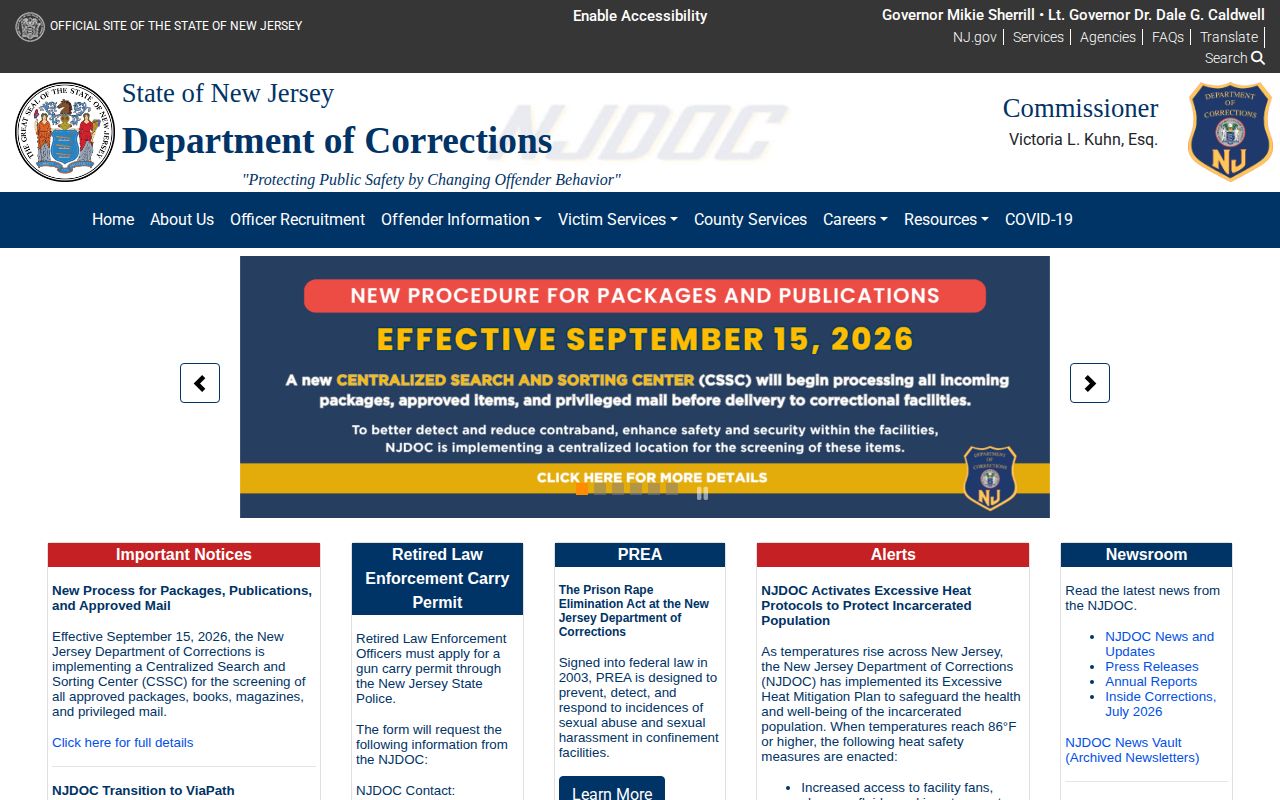
This statewide source applies to NJDOC custody, not every county, federal, or immigration custody episode.
Find New Jersey Inmate Release Dates
Use the official NJDOC offender search for a sentenced state prisoner. An SBI number is the most direct identifier when known. A name search can work, but the match should be checked against aliases, county of commitment, case details, sentence date, offenses, and physical descriptors. A same-name result is not enough.
- Confirm that the person is or was in NJDOC custody.
- Search by SBI number or the available name fields.
- Open the matching record after checking identifiers.
- Read Current Max Release Date and Current Parole Eligibility Date separately.
- After release, check the relevant Date Out-of-Custody segment.
- Save the query date because calculations and records can change.
The public search disclaimer says its data update biweekly and may not show the true current location, status, or release date. It also says information is not updated after correctional-facility custody ends. Use the displayed calculation as an agency field, not as a promise. For a full walkthrough of released-state-prison records, the NJDOC Offender Search page explains custody history and records-request fallbacks.
The official search screen shows the entry workflow for a New Jersey state prisoner.
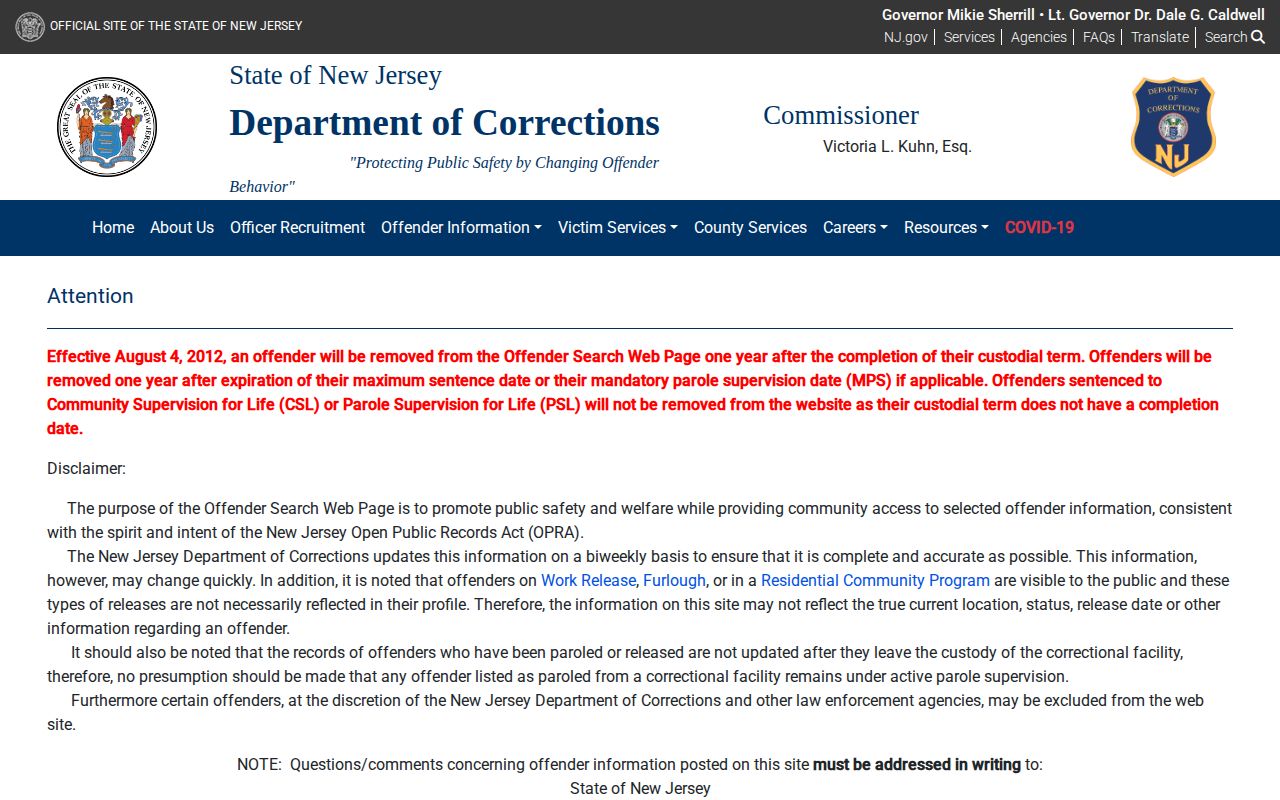
The matching profile, rather than the search form alone, supplies the dates and sentence history that must be compared.
Note: A public date should be copied with its exact label and the day the record was checked.
Three New Jersey Release Dates
New Jersey's most useful release-date safeguard is the clear split among three official fields. The distinctions come from NJDOC Search Engine Help. Each field answers a different question, and only one records the completed event. Preserve the Department's wording when sharing or requesting proof.
| NJDOC Field | What It Means | What It Does Not Prove |
|---|---|---|
| Current Max Release Date | The most recent calculated date after earned days and days added for negative institutional conduct. | That the person left custody on that date. |
| Current Parole Eligibility Date | The most recent expected release date under State Parole Board calculation policy. | A parole grant or physical departure. |
| Date Out-of-Custody | The date released from custody for the listed historical segment. | That supervision or another agency's custody also ended. |
NJDOC warns that the current maximum calculation can differ at the end of each month. Parole eligibility can also be shaped by the judgment, a mandatory minimum, and offense-specific law. Once an event occurs, compare the Date Out-of-Custody with the correct Date In-Custody and sentence segment. A person can have more than one admission and release.
- Mandatory minimum
- The part of a sentence that must be served before release eligibility under the controlling judgment or law.
- Concurrent terms
- Sentences that run at the same time, subject to the actual judgment and calculation.
- Consecutive terms
- Sentences ordered to run one after another.
- Detainer
- A hold that can change where the person goes after one custody ends.
New Jersey Good-Time Credits
New Jersey law provides several credit rules, but the public NJDOC calculation is safer than a homemade calendar. R.S. 30:4-140 sets a commutation-credit schedule for continuous orderly behavior and addresses forfeiture and restoration. Commutation credit is a deduction authorized under that statute. It can be lost under the statutory framework and may later be restored.
N.J.S.A. 30:4-92 authorizes compensation and credits tied to productive occupation and minimum-custody assignments. These rules do not operate in isolation. The live record can reflect jail credit, the structure of concurrent or consecutive terms, work or minimum-custody credits, forfeitures, restorations, and later corrections to the sentence.
| Credit or Rule | Source | Effect on the Date |
|---|---|---|
| Commutation credit | R.S. 30:4-140 | Authorized deductions for continuous orderly behavior, subject to loss and restoration. |
| Work or assignment credit | N.J.S.A. 30:4-92 | Credits linked to qualifying productive occupation or minimum-custody assignments. |
| Jail credit | Sentence and agency calculation | Credited prior custody can change the computed term. |
| Compliance credit | Earn Your Way Out Act | Operates within the Act's eligibility and review framework. |
Do not subtract a statutory table from the pronounced sentence and publish the result as the New Jersey inmate release date. The judgment and agency record may contain facts that the simple arithmetic misses.
New Jersey NERA Release Limits
The No Early Release Act, N.J.S.A. 2C:43-7.2, requires service of 85 percent of the sentence imposed before parole eligibility for the violent crimes covered by that law. It also provides a period of mandatory supervision after release. NERA is a truth-in-sentencing rule, meaning the statute sets a required share of the covered sentence before parole eligibility.
The rule is often overstated. It does not mean that every New Jersey prison sentence is served at 85 percent. The offense, judgment, sentence, and governing statute determine whether NERA applies. Even in a covered case, the 85 percent point is a parole-ineligibility boundary, not automatic proof of release on that day.
A mandatory minimum imposed under another law or by the judgment may also change eligibility. Life terms, county terms, consecutive sentences, and special statutes need their own calculation. Use Current Parole Eligibility Date as labeled and seek the sentence record when the basis is unclear.
New Jersey Administrative Parole Release
The Earn Your Way Out Act created administrative parole release and compliance credits within a statutory eligibility and review framework. “Administrative” does not mean that a person leaves without a documented process. Nor does it mean release must occur on the first date a public user sees.
Check the Current Parole Eligibility Date, the applicable State Parole Board notice or review, any detainer, and the final NJDOC movement record. A grant or expected date can still be followed by a future effective date, an approved-plan condition, new information, or a rescission issue before physical release. Rescission is the process for reconsidering a grant when adverse information arises before departure.
The State Parole Board hearing page distinguishes initial, panel, rescission, and revocation proceedings.
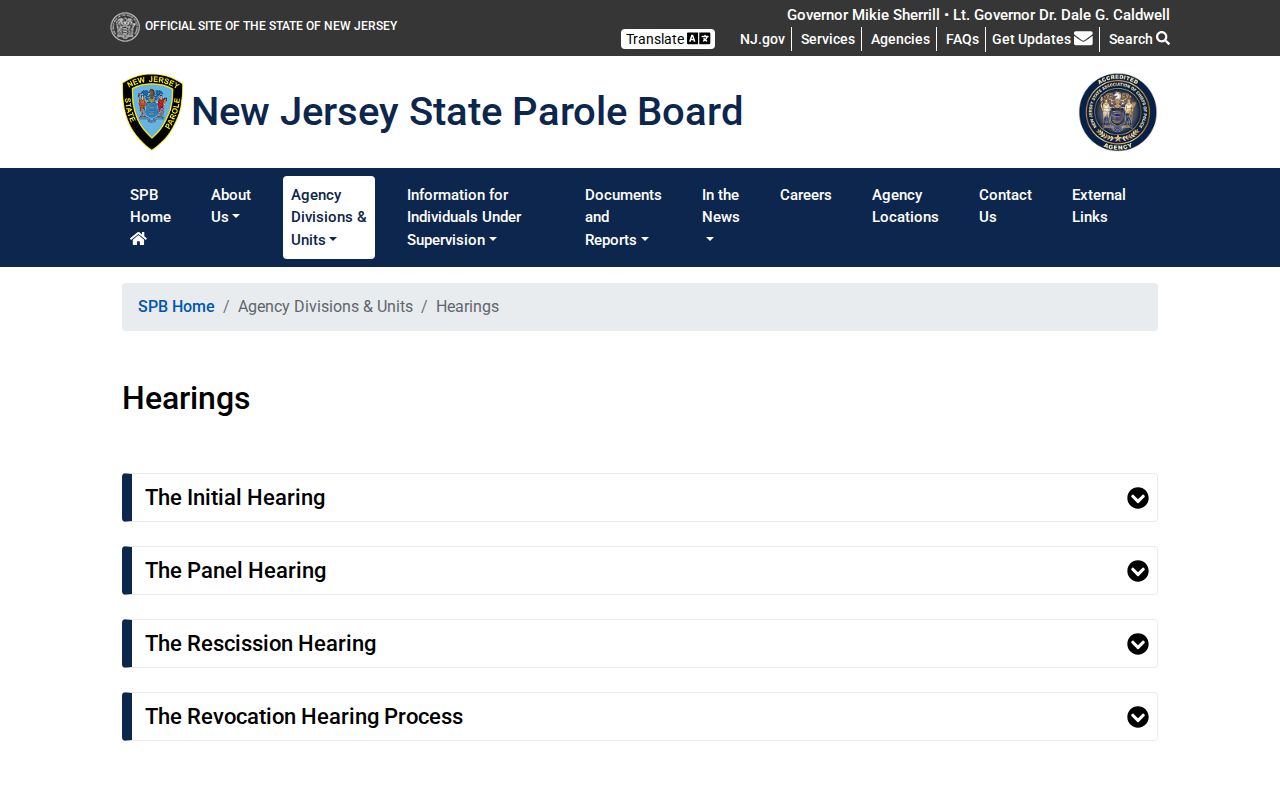
These stages explain why an eligibility date, a grant, and a completed release can appear on different dates.
Note: Eligibility, recommendation, grant, release, and discharge describe different points and should never be used as synonyms.
Why New Jersey Release Dates Change
A current maximum release date can move as NJDOC applies new information. Some changes come from conduct credits. Others come from the court, sentence structure, a new custody event, or parole action. A detainer may not change the end of the NJDOC segment itself, but it can change the person's destination and make the event look different from a community release.
| Factor | Possible Effect | Best Record to Check |
|---|---|---|
| Credits earned | The current maximum date may move earlier. | NJDOC calculation and sentence history |
| Credits forfeited or restored | Days may be added back or deducted again. | NJDOC calculation and applicable record |
| Corrected jail credit | The time credited to the term changes. | Judgment, amended order, and NJDOC record |
| Consecutive terms | The combined period may extend. | Judgment and sentence history |
| Appeal or amended judgment | The sentence basis can change. | Latest court order and NJDOC update |
| Parole action | A grant, denial, deferral, or rescission alters the path. | State Parole Board record |
| Return after violation | A new custody segment and calculation may appear. | NJDOC history and revocation record |
The date should always retain its label and query date. If the purpose is to confirm that release happened, wait for Date Out-of-Custody or request the movement transaction. A future field cannot establish the actual gate or transfer time.
The NJDOC release outcome report index shows the Department's statewide release-report context.
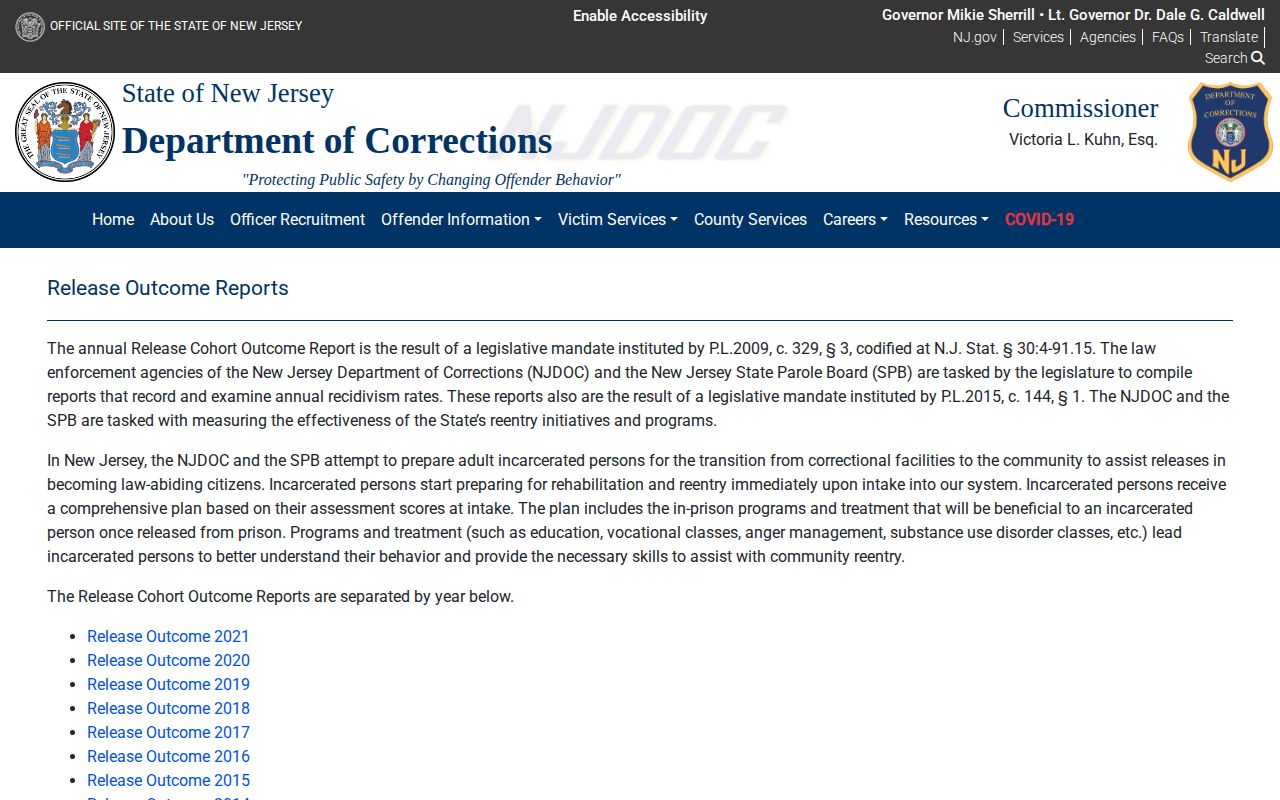
Aggregate reports describe cohorts and trends, but the individual history remains the source for a particular person's dates.
County Inmate Release Date Routes
A county detainee follows a different path. A person awaiting trial has no sentence-derived maximum date unless a court order or later sentence creates one. Release may result from a court decision, bond process, dismissal, time-served disposition, transfer, or another event documented by the county and court. The holding county is more important than the county named in casual reports because shared-services agreements can place a person elsewhere.
For a county sentence, request the maintained computation or release transaction from the agency that held the person. Check the latest court judgment or amended order as well. A county release can be a transfer to NJDOC, another county, federal authority, or immigration custody. It should not be restated as freedom from all custody.
| Person's Status | Date Source | Key Caution |
|---|---|---|
| NJDOC sentenced prisoner | NJDOC offender history | Current maximum is not actual release. |
| County-sentenced person | Holding county and court record | Local calculation and credits control. |
| Pretrial detainee | Court and holding agency | No fixed sentence-based date may exist. |
| Federal sentenced prisoner | BOP Inmate Locator | A future federal date can change. |
Confirm New Jersey Actual Release
After the expected date passes, return to the relevant agency record. For NJDOC, look for Date Out-of-Custody in the correct history segment. If precision matters or the result is missing, request the movement or release transaction through NJDOC OPRA. The public search generally removes records one year after completion of the custodial term, while Community Supervision for Life and Parole Supervision for Life cases remain under the Department's stated rule.
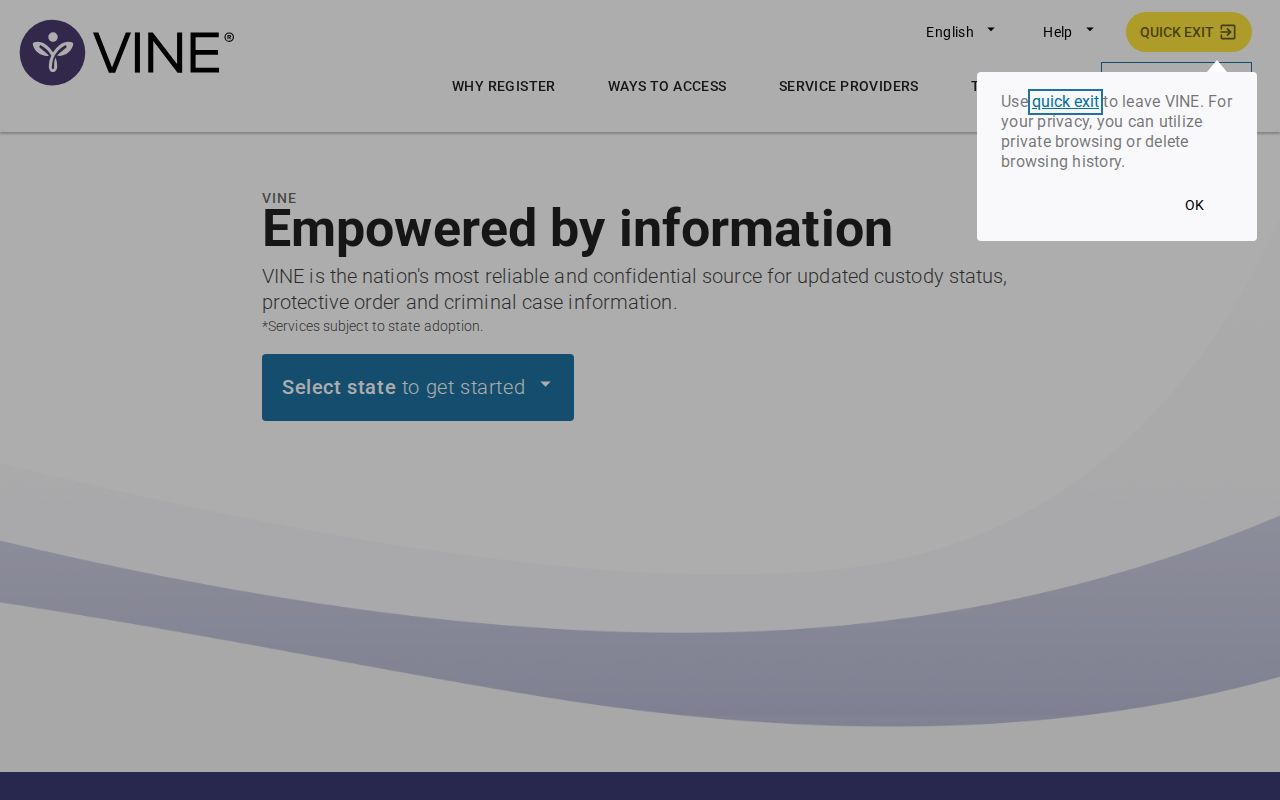
New Jersey Enhanced VINE can help before a release. Its official brochure describes it as a custody-information service, so the best use is to find the person while held and register for a custody-change notice. The alert reflects the reporting agency's event. It may not identify whether another jail, NJDOC, BOP, ICE, a hospital, or community placement received the person.
The VINELink interface provides the New Jersey search and notification-registration workflow.
Preserve the notice details, then verify the completed event with the agency that controlled the custody segment.
The VINELink Release Check explains the specific-person search and registration process. A notification is useful evidence of a reported change, but the final NJDOC or county record remains the stronger source for an actual release date and destination.